Michael Caine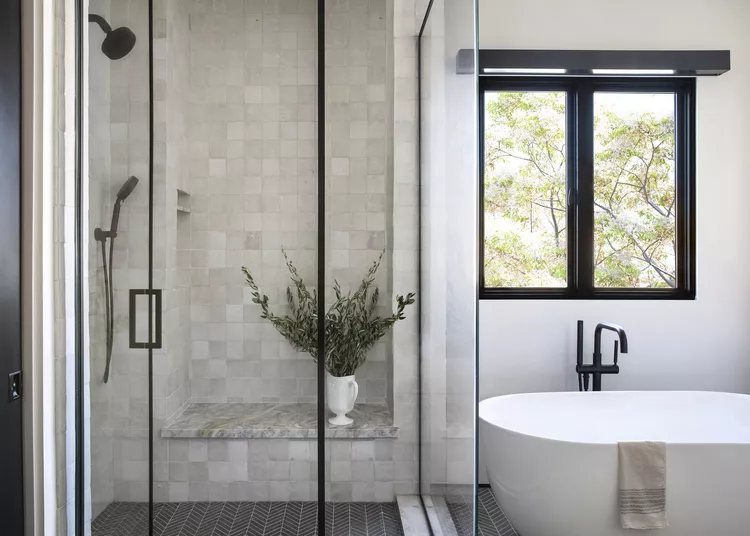
A shower bench can make washing, shaving, resting, and managing toiletries more comfortable, but an oversized seat can quickly make a small shower feel cramped. Good shower bench ideas balance usable seating depth with standing room, drainage, reach, and door clearance. The bench should support normal shower routines without becoming the feature everyone has to work around.
Match the Bench Type to Available Space
Built-in benches provide a permanent, integrated look, while folding seats preserve more floor area when they’re not needed. Freestanding shower stools offer flexibility but require stable placement on the wet floor.
Reviewing residential design references can help generate layout ideas, although the best bench type depends on the shower’s actual dimensions and how people move within it.
Use Corners Carefully
A corner seat can save space, especially when full-width seating would narrow the standing area too much. However, tiny triangular benches may offer little practical support.
The seat needs enough usable surface to feel secure rather than functioning as decorative shelving.
Keep Water Controls Within Comfortable Reach
Someone using the bench shouldn’t need to stand and cross the shower repeatedly to adjust temperature or reach the hand shower. Controls and accessories are easier to use when their placement considers the seated position.
General practical renovation thinking may inspire different layouts, but reach should be tested from the bench location before plumbing positions are finalized.
| Bench Style | Space Use | Best Fit |
|---|---|---|
| Built-in | Permanent footprint | Larger showers |
| Folding | Opens only when needed | Tight spaces |
| Corner | Uses side area | Compact layouts |
| Freestanding | Easily movable | Flexible setups |
Give the Bench a Deliberate Visual Role
Matching the bench finish to surrounding tile can create a calm integrated look. A contrasting material can also work when it echoes another bathroom detail.
Broader design details and finishes can help shape the room’s appearance, but any bench surface should also tolerate frequent water exposure and remain manageable to clean.
Avoid Blocking the Main Standing Zone
The shower still needs a comfortable place to stand, turn, and use the water controls. A bench positioned directly beneath the main spray may also remain constantly wet when no one is sitting on it.
Placing the seat slightly to one side can preserve more flexible use of the shower.
Common Bench Planning Mistakes
One mistake is selecting bench dimensions from a photograph without comparing them with the actual shower. A seat that looks compact in a large enclosure may dominate a smaller one.
Poor drainage is another problem. Flat built-in surfaces may hold water, while complicated corners can collect residue. The practical bench is one that feels stable, drains properly, stays reasonably easy to clean, and leaves enough usable floor space.
Frequently Asked Questions
Is a folding shower bench good for a small bathroom?
It can be. Folding seats preserve standing space when raised, making them useful where a permanently projecting bench would narrow the shower too much.
Can a shower bench double as storage?
A bench can hold a few bathing items, but turning the entire seat into storage can reduce usable sitting space. Separate niches or shelves often work better.
Where should a hand shower be placed near a bench?
It should be reachable comfortably from the seated position without excessive twisting or stretching. The exact location depends on the bench, controls, wall layout, and user.
Protect Space as Well as Comfort
A shower bench should make the enclosure more useful, not smaller in every practical sense. Choose a seat that fits the available footprint, coordinate controls with the seated position, and keep drainage and cleaning in mind. When the proportions are right, the bench can feel like a natural bathroom feature instead of a bulky addition.