TomEditor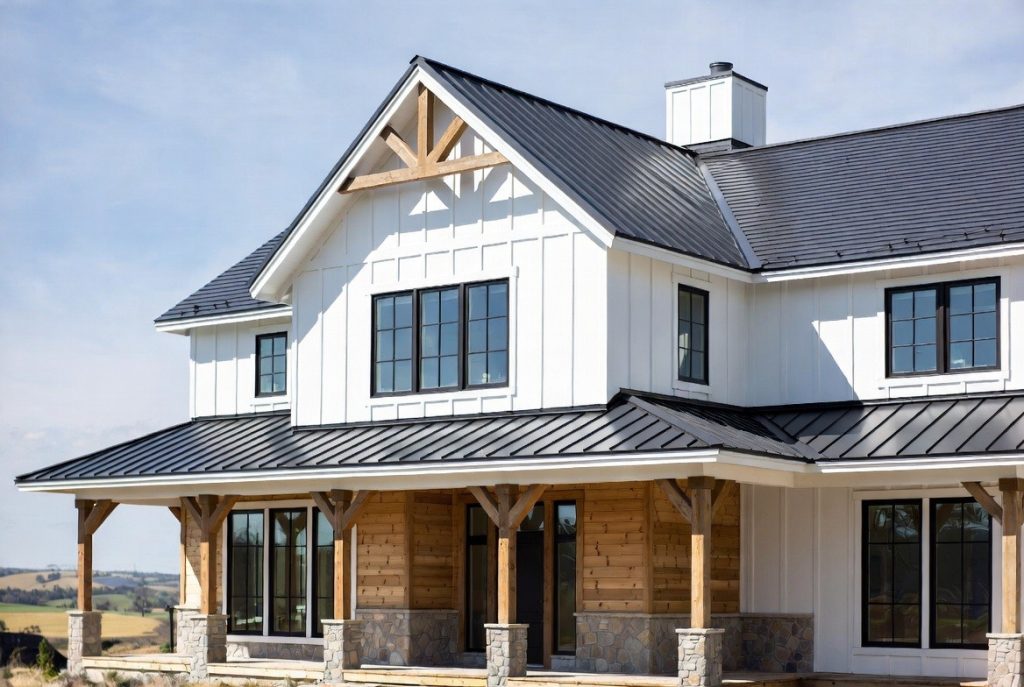
A farmhouse is a vernacular architectural style, meaning it was built for function rather than designed to follow a formal architectural movement. Traditional farmhouses are simple, rectangular, two-story homes with steep gabled roofs, large covered porches, wood siding, and symmetrical windows, originally built on working farms in the 1700s and 1800s. Today, the style has evolved into the popular Modern Farmhouse, which keeps the classic silhouette while adding clean lines, mixed materials, and contemporary interiors.
Below is a clear breakdown of farmhouse architecture, its key features, and how it compares to other styles.
Is “Farmhouse” Actually an Architectural Style?
Yes and no. Farmhouse is a functional category rather than a single architectural movement like Victorian or Colonial. It refers to homes built on or for farms, which is why early farmhouses borrowed elements from whatever style was popular regionally, such as Colonial, Victorian, Craftsman, or Greek Revival. Over time, the recurring features (gable roofs, porches, simple symmetry) became recognizable enough to count as their own style.
Key Features of Farmhouse Architecture
Most farmhouses, old or new, share these defining traits:
- Rectangular, two-story shape with simple, boxy massing
- Steep gabled or pitched roof, often with dormers
- Large covered front porch, sometimes wrapping the home
- Wood siding or board-and-batten exteriors, usually painted white
- Symmetrical window placement, often double-hung with shutters
- Central front door as a focal point
- Functional, open interior layouts built around the kitchen
- Neutral, natural materials like wood, stone, brick, and metal accents
The look is intentionally unfussy. Farmhouses were built to be practical, durable, and easy to add onto as families grew.
Common Types of Farmhouse Architecture
Farmhouses are usually grouped into a few recognizable styles:
1. Traditional (Classic) Farmhouse
The original, built between the 1700s and early 1900s. Two stories, steep roof, white-painted wood siding, deep porch, and minimal ornamentation.
2. Colonial Farmhouse
A symmetrical farmhouse with Colonial influences: even window spacing, central chimney, and a balanced facade.
3. Victorian Farmhouse
Built in the late 1800s with decorative trim, ornate porch railings, gingerbread detailing, and bay windows. More elaborate than the classic version.
4. Modern Farmhouse
The contemporary update. Keeps the gabled roof, porch, and white siding but adds black window frames, metal roof accents, mixed materials, and a minimalist interior. For a deeper look at how this style is being designed and built today, this guide on modern farmhouse architecture is a great reference.
5. Modern Rustic / Farmhouse Hybrid
Blends farmhouse silhouettes with industrial, Scandinavian, or rustic-cabin elements. Common in mountain regions and rural new builds.
Inside a Farmhouse: Interior Style
The exterior tells half the story. Inside, farmhouses are defined by:
- Open kitchens as the heart of the home
- Shaker cabinets, butcher-block or stone countertops, and apron-front sinks
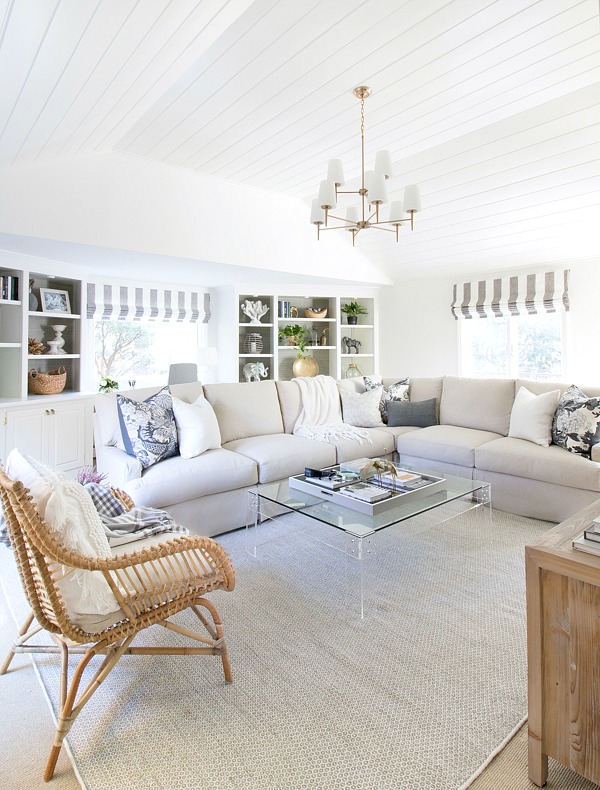
- Exposed wood beams on ceilings
- Shiplap or beadboard walls
- Wide-plank wood floors
- Neutral palettes with white, cream, charcoal, and natural wood tones
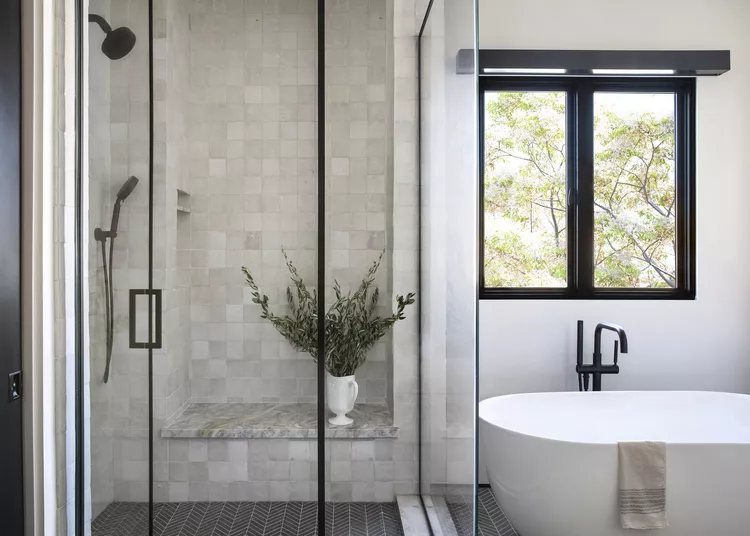
Surface finishes do a lot of heavy lifting in this style. Natural Tiles, warm wood, and matte fixtures give farmhouse interiors their grounded, lived-in feel without leaning country-kitsch.
The kitchen is usually where the style is most visible. A classic farmhouse kitchen pairs Shaker cabinets and an apron sink with simple kitchen backsplash tiles such as white subway, handmade ceramic, or stone mosaic, which keep the look authentic while adding texture.
How Farmhouse Differs From Similar Styles
It’s easy to mix farmhouse up with related styles. Quick distinctions:
- Farmhouse vs. Colonial: Colonials are more formal, with strict symmetry and brick or clapboard exteriors. Farmhouses are simpler and built for utility.
- Farmhouse vs. Craftsman: Craftsman homes have low-pitched roofs, exposed rafters, and tapered porch columns. Farmhouses have steep roofs and full-width porches.
- Farmhouse vs. Cottage: Cottages are smaller, more whimsical, and often single-story. Farmhouses are taller, plainer, and more rectangular.
- Farmhouse vs. Ranch: Ranches are single-story, horizontal homes from the mid-1900s. Farmhouses are vertical, two-story, and far older in origin.
Why Farmhouse Architecture Is So Popular Today
Modern Farmhouse exploded in popularity in the 2010s thanks to designers like Joanna Gaines and shows like Fixer Upper, but the appeal is older than the trend. The style works because it is:
- Affordable to build with simple framing
- Visually timeless and resistant to dating
- Flexible across rural, suburban, and even urban settings
- Family-friendly with practical layouts and outdoor living space
- Easy to personalize with small touches like lighting, hardware, and tile
Conclusion
A farmhouse isn’t one strict architectural style. It’s a vernacular tradition built around practicality, defined by simple shapes, gabled roofs, big porches, and natural materials, and adapted across centuries into traditional, Victorian, Colonial, and modern variations. Whether you’re restoring an old one or building a Modern Farmhouse from scratch, the core principles stay the same: clean lines, honest materials, and a home that feels welcoming the moment you see it.
Frequently Asked Questions (FAQs)
1. Is a farmhouse a style of architecture? It’s a vernacular style, meaning it grew out of function rather than a formal architectural movement. Over time it developed enough recognizable traits (gabled roof, porch, white siding, symmetrical windows) to be classified as its own style.
2. What is the difference between a farmhouse and a modern farmhouse? A traditional farmhouse uses classic wood siding, simple trim, and warm interiors. A modern farmhouse keeps the silhouette but adds black-framed windows, metal roof accents, mixed materials, and minimalist interiors.
3. What are the key features of a farmhouse? Two stories, steep gabled roof, large covered porch, white wood siding, symmetrical windows, central front door, and an open interior centered on the kitchen.
4. What materials are used in farmhouse architecture? Wood siding, board-and-batten, stone, brick, metal roofing, shiplap, butcher-block, and natural tile. The palette stays neutral and the materials feel honest.
5. What is the most popular farmhouse style today? Modern Farmhouse remains the most popular, especially in new construction, because it blends classic charm with clean contemporary lines.
6. Is farmhouse architecture only American? No. Farmhouses exist worldwide (English country, French provincial, Scandinavian, Italian rustic), but the term is most associated with American rural architecture from the 1700s to early 1900s.7. What is the inside of a farmhouse supposed to look like? Open layouts, wide-plank wood floors, Shaker cabinets, apron sinks, exposed beams, shiplap walls, and natural materials. The kitchen is the heart of the home.

 Michael Caine