Michael Caine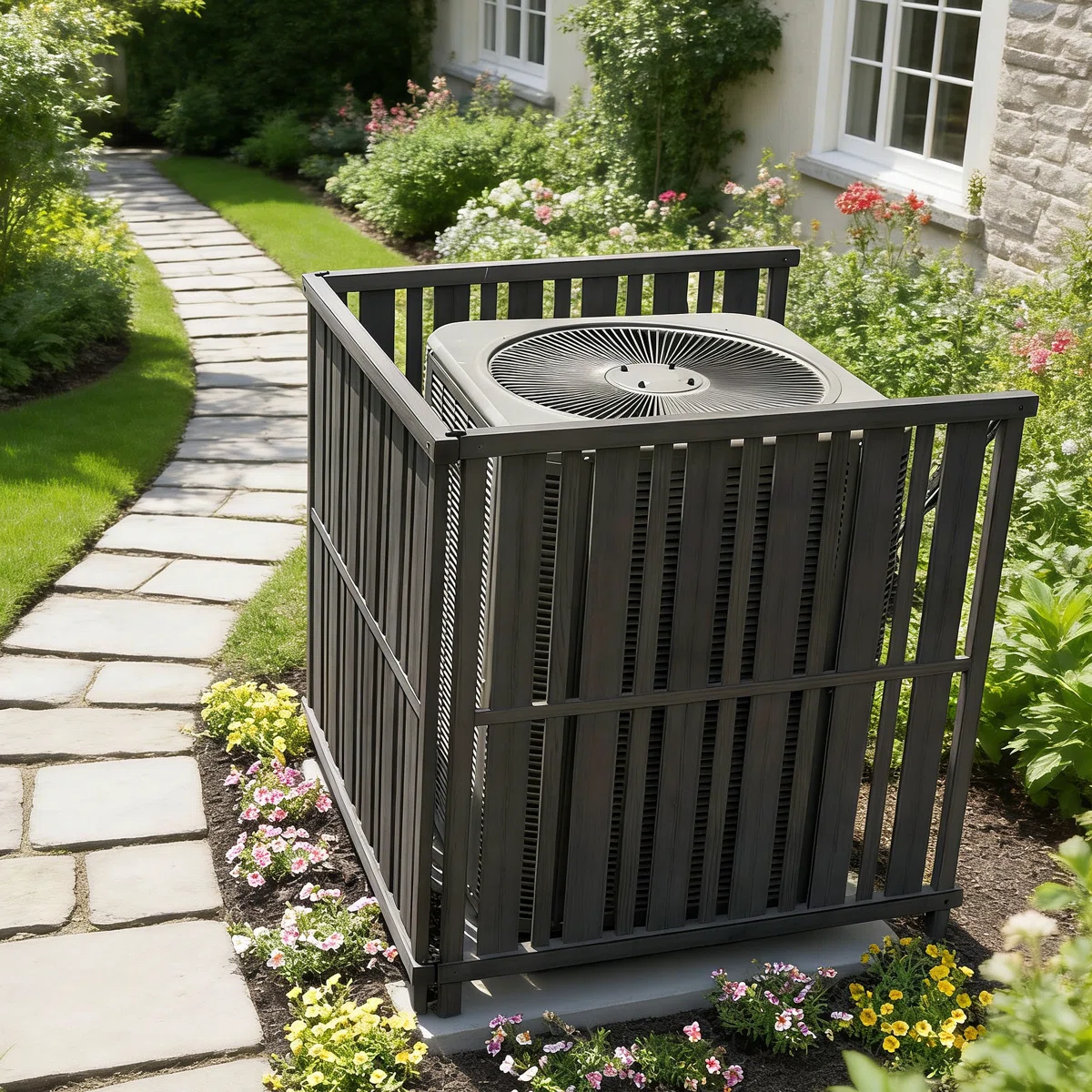
An outdoor air-conditioning condenser can interrupt an otherwise tidy landscape, but covering it too aggressively can interfere with how the equipment releases heat. Air conditioner screen ideas should therefore begin with ventilation and service access. The goal is to reduce visual exposure, not wrap the unit inside a decorative box.
Favor Open Slats and Partial Screening
Widely spaced vertical or horizontal slats can hide the equipment from a patio or walkway while letting air pass through. Open metal panels and strategically placed planting can accomplish the same thing.
If the condenser sits near a recreational area, reviewing outdoor landscape layouts can help you position the screen so it feels connected to the rest of the yard rather than standing alone.
Consider the View From Several Directions
You may only need one or two panels. Screening the sides visible from a deck or window can be more effective and less restrictive than enclosing all four sides.
Respect the Unit’s Working Space
Outdoor HVAC equipment needs room around it for airflow and future servicing. Exact clearance requirements vary by manufacturer and model, so installation instructions should guide screen positioning.
A screen can still be attractive without becoming dense. Gardens influenced by comfortable natural settings might use spaced timber battens, ornamental grasses, or loose planting while keeping the mechanical zone open.
| Screening Choice | Ventilation Potential | Maintenance Need |
|---|---|---|
| Spaced slats | High | Occasional cleaning |
| Perforated metal | High | Low |
| Shrubs | Variable | Regular trimming |
| Solid panels | Low | Usually unsuitable nearby |
Keep Plants Under Control
Shrubs can soften the appearance of mechanical equipment, but growth needs to be managed. Leaves and branches shouldn’t crowd the unit or make service panels difficult to reach.
Outdoor mechanical planning is also part of long-term home upkeep. Resources covering property care concepts can provide broader context for making exterior upgrades that remain practical rather than purely decorative.
Why Tight AC Enclosures Can Fail
A screen can look spacious when first installed and become restrictive after plants fill in or stored objects accumulate nearby. That’s why ongoing clearance matters just as much as the original construction.
Another mistake is building a screen that technicians must dismantle for ordinary service. Removable panels or open access sides can prevent that inconvenience while maintaining the intended visual improvement.
Frequently Asked Questions
Can I completely hide my outdoor AC unit?
You can reduce its visibility, but completely surrounding it with solid construction may restrict airflow and service access. Follow the manufacturer’s clearance guidance before adding any permanent screen.
Are shrubs good for screening an air conditioner?
They can work if kept trimmed and positioned far enough away. Choose plants that are easy to control and don’t drop large amounts of leaves or other debris around the equipment.
Can a screen be taller than the AC condenser?
Possibly, but height, spacing, and overhead airflow all matter. Rather than relying on a general rule, check the installation information for the specific equipment before finalizing the design.
Let the Equipment Breathe
The strongest AC screen is one you barely notice because both the landscape and the equipment continue working properly. Screen only the necessary sight lines, preserve manufacturer-required space, and keep vegetation under control. A few open panels placed thoughtfully can usually improve the view without creating the risks associated with a tightly enclosed structure.