Michael Caine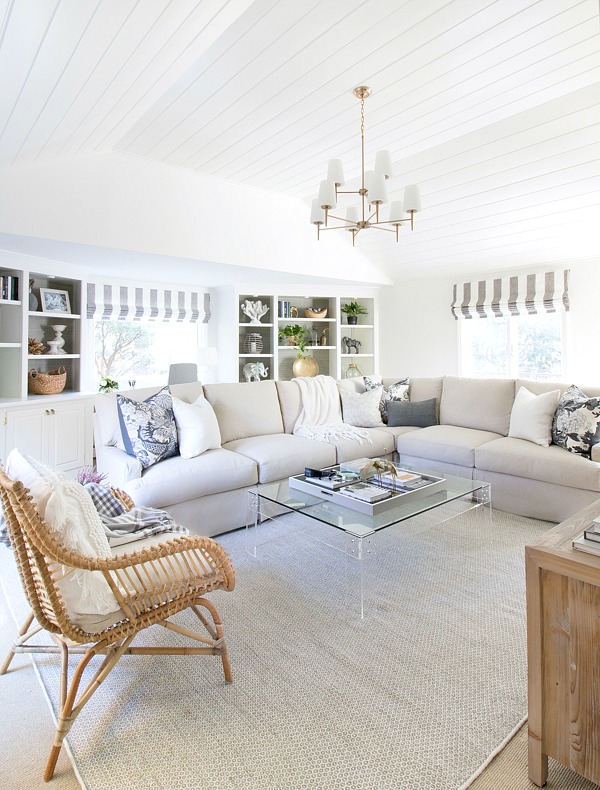
Roman shades combine the softness of fabric with a much neater profile than full curtains. Well-planned Roman shade ideas can reduce visual clutter around windows while still introducing pattern, texture, privacy, and light control. Their compact shape makes them especially useful around desks, built-ins, narrow walls, and smaller rooms.
Choose the Right Roman Shade Style
Roman shades aren’t all constructed the same way. Flat shades have a simple surface when lowered, while relaxed styles create a gentle curve along the bottom.
Rooms with strong architectural lines often suit flatter designs because the shade follows the geometry of the window. More casual interiors can handle softer folds. Looking through architectural home references may help clarify whether a structured or relaxed fabric treatment better fits the room.
Patterns also behave differently depending on construction. Large prints are usually easiest to appreciate on shades with broad, uninterrupted surfaces.
Decide Between Inside and Outside Mounting
An inside-mounted Roman shade sits within the window opening and creates a contained appearance. It works particularly well when the existing trim deserves to remain visible.
Outside mounting covers more of the frame and can make a small window appear wider or taller. It may also help when the opening lacks enough depth for internal hardware.
| Mounting Choice | Visual Result | Main Consideration |
|---|---|---|
| Inside mount | Crisp and contained | Requires adequate recess |
| Outside mount | Larger window effect | Covers some trim |
| High outside mount | Adds apparent height | Needs enough fabric |
| Wide outside mount | Broadens proportions | Check nearby wall space |
Use Fabric to Control Visual Weight
A Roman shade can be quiet or expressive depending on the textile. Solid neutral fabric emphasizes the clean shape, while stripes or prints make the shade a stronger decorative feature.
The room’s other surfaces should guide the choice. If upholstery, rugs, and artwork already carry substantial pattern, a simpler shade can provide relief. Collections of interior design inspiration can be useful for comparing restrained fabric treatments with rooms that depend more heavily on pattern.
Lining affects performance as well. Privacy lining, light-filtering construction, and room-darkening materials create different results, so function should be decided before fabric is finalized.
Coordinate Shades With the Window Surround
Roman shades look strongest when they relate clearly to trim, wall color, and nearby furniture. A shade that’s slightly wider than an outside-mounted window, for example, can create stronger proportions when the original opening feels narrow.
Layering is still possible. A tailored shade can sit beneath simple side panels when additional softness is wanted. Broader home decorating concepts can offer ideas for connecting fabric treatments with the rest of the room without making the window area feel overloaded.
Keep Controls Practical
Cordless or accessible control systems can make frequently used shades easier to operate. Whatever mechanism you choose, it should remain comfortable to reach without requiring furniture to be moved.
Where Roman Shades Can Fall Short
Roman shades aren’t automatically the right answer for every window. Large shades can become heavy, and some fabrics develop uneven folds if their construction isn’t suitable.
Highly humid or messy areas may also require extra thought because fabric can be harder to clean than certain hard window coverings. Another mistake is selecting fabric before deciding how much privacy and light control the room needs. Appearance should follow those functional requirements, not replace them.
Frequently Asked Questions
Are Roman shades good for small rooms?
Yes. Their compact design keeps fabric close to the window instead of extending onto large areas of wall, which can help smaller rooms feel less visually crowded.
Can Roman shades be mounted above window trim?
Yes. An outside-mounted shade can sit above the trim and may make the window appear taller. Accurate width and drop measurements are important for a convincing result.
Do Roman shades need lining?
Not always. Lining may improve privacy, light control, structure, or fabric protection, but the appropriate construction depends on the room and the effect you want.
Keep the Window Treatment Visually Quiet
Roman shades are most successful when their compact form solves a genuine design problem. Start with mounting position and light-control needs, then select a fabric that supports the room rather than overwhelming it. The result can provide the softness people expect from curtains while preserving the sharper architectural outline that makes Roman shades so useful.