Michael Caine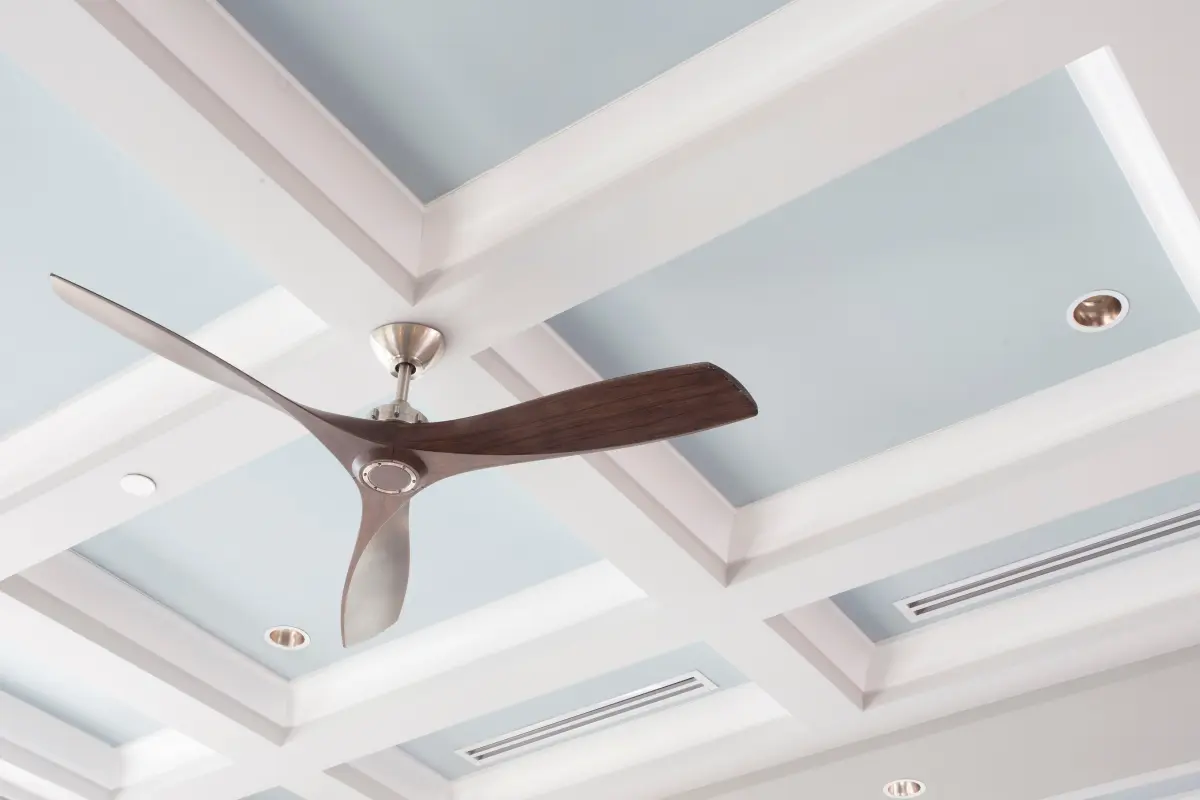
A ceiling fan doesn’t lower the room’s actual temperature in the way an air conditioner does, but it can make occupants feel more comfortable by moving air across the skin. Good ceiling fan placement ideas focus on positioning the fan where people spend time while maintaining safe clearance around blades, ceilings, walls, and furniture.
Center the Fan on the Occupied Zone
The geometric center of a room isn’t always the best location. In a large living area, the seating group may sit off-center because of a fireplace, television wall, or open-plan layout.
Placing the fan over the area where people actually sit can make airflow more useful. For broader room arrangement inspiration, think of the fan as part of the furniture plan rather than something positioned automatically in the middle of the ceiling.
Watch Nearby Walls and Tall Furniture
Blades need adequate space from walls, cabinets, and other obstructions so air can move freely. A fan squeezed into a corner may circulate less effectively and can look visually crowded.
Select Fan Size for the Space
A fan that is too small may provide strong airflow only directly beneath it. An oversized model can dominate a compact room and may create more air movement than occupants want at normal settings.
Manufacturer sizing and clearance guidance should guide the final choice. Room dimensions matter, but ceiling height and furniture placement also affect how the fan feels in daily use.
| Placement Factor | Why It Matters | What to Check |
|---|---|---|
| Occupied area | Directs airflow toward people | Seating or sleeping position |
| Ceiling height | Affects mounting choice | Recommended blade clearance |
| Nearby walls | Influences circulation | Side clearance |
| Furniture layout | Changes useful airflow zone | Tall cabinets and beds |
Adjust Mounting Height Carefully
Fans installed on high ceilings may need a downrod to bring the blades closer to the occupied zone. Low ceilings may require a closer-to-ceiling mounting style if the fan is designed for it.
Design references such as balanced interior layouts can help keep the fixture visually proportional to the room. Still, appearance should never override the manufacturer’s installation clearances or electrical requirements.
Use More Than One Fan in Large Rooms
A long open-plan room may not be served well by one fan in the middle. Two appropriately positioned fans can sometimes produce more consistent airflow across separate seating, dining, or activity areas.
The same thinking applies to spaces shown in comfortable lounge concepts: airflow should follow how the room is used. A fan over an empty passage provides less benefit than one serving the places where people spend extended periods.
Account for Other Air Sources
Supply vents, return grilles, open doors, and windows already influence air movement. A ceiling fan should complement those patterns rather than create an uncomfortable blast in one small area.
Placement Mistakes That Reduce Comfort
A common mistake is buying a fan first and deciding where it belongs later. Blade diameter, ceiling slope, downrod length, lighting, and structural support all affect installation.
Another misunderstanding is leaving fans running in empty rooms for cooling. Fans mainly improve comfort through air movement around occupants, so operating them continuously in vacant spaces may provide little direct comfort benefit.
Frequently Asked Questions
Should a ceiling fan be centered over a bed?
It can be positioned over or near the occupied sleeping area when installation clearances and structural requirements permit. The best position depends on bed location, room shape, ceiling height, and the desired airflow.
Can one ceiling fan handle an open-plan living area?
Sometimes, but long or irregular spaces may have weak airflow at the edges. Multiple properly sized fans may distribute air more evenly across separate occupied zones.
Does reversing a ceiling fan help in winter?
Many reversible fans are designed to change airflow direction seasonally. Follow the manufacturer’s instructions because the correct setting and speed depend on the fan design and how air circulates in the particular room.
Position the Fan Around People, Not Empty Space
Effective ceiling fan placement ideas start with how occupants actually use the room. Consider seating, beds, ceiling height, wall clearance, and existing airflow before choosing the mounting point. A well-positioned fan can make a space feel noticeably more comfortable without forcing the heating or cooling system to do all the work.